
Achieving consistent fitness progress is the ultimate goal for anyone who has ever felt the frustration of starting a New Year’s resolution only to see it fizzle out by March.
If you have missed a workout lately, you are likely feeling that familiar sting of guilt or the creeping thought that you might as well give up until next Monday.
Let’s hop into your proverbial Delorean and travel back in time.
Not too far, just a couple of months to the beginning of the year when you set those ambitious goals for your health and physique.
What does that version of you from two months ago think about what you have accomplished so far?
Are you happy and excited about your progress?
Or are you looking at your gym bag in the corner of the room and thinking, “Oye, here we go again”?
Either way, it is time to turn that Delorean around and come back to the present moment. It is time to get to work.
If you are happy with how things are going, that is fantastic.
But if you are not, like the vast majority of people who fall off the wagon, it is definitely not too late to get back on track.
To achieve consistent fitness progress, we have to stop treating fitness like a seasonal event and start treating it like a specialized skill that requires a strategic, long-term approach.
Table of Contents
Why Habits are Hard to Break
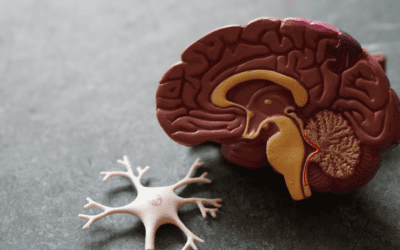
To understand why your consistent fitness progress often stalls, we have to look at the basal ganglia, the part of your brain responsible for “chunking” behaviors into automatic routines.
Your brain is a survival machine designed to conserve energy. Creating a new habit, like going to the gym at 6:00 AM, requires a massive amount of cognitive energy from the prefrontal cortex.
In contrast, your old habits, like hitting the snooze button or reaching for a sugary snack when stressed, are deeply engraved neural pathways.
These are like superhighways in your brain. When you try to build a new fitness habit, you are essentially trying to machete your way through a thick jungle while the paved superhighway of your old habits is right next to you, calling your name.
This is why habits are so hard to break. Your brain does not distinguish between “good” and “bad” habits; it only distinguishes between “efficient” and “inefficient” ones. Your old, sedentary habits are efficient because they require zero conscious thought. To see consistent fitness progress, you have to intentionally “starve” the old pathways while consistently “feeding” the new ones until the new behavior becomes the new path of least resistance.
The Science of Creating Consistent Fitness Progress
Creating a new habit for consistent fitness progress follows a specific neurological loop: the Cue, the Routine, and the Reward.
- The Cue: This is the trigger that tells your brain to go into automatic mode. It could be the time of day, a specific location, or an emotional state. If you want to be consistent, you need “loud” cues. Putting your sneakers by the door is a visual cue that triggers the brain to prepare for movement.
- The Routine: This is the behavior itself. The secret here is to make the routine so small that it is impossible to say no. If you can’t commit to an hour, commit to five minutes. The goal is to establish the neural pathway, not to break a world record on day one.
- The Reward: This is the most overlooked part. Your brain needs a dopamine hit to “stamp” the behavior into your memory. This is why you should celebrate small wins. If you finish a workout, take a moment to acknowledge how good you feel. This positive reinforcement tells your basal ganglia, “This was a good experience. Let’s do it again.”
Strategy 1: The “B Minus” Philosophy of Exercise
We often fall into the trap of thinking that if we can’t give 100%, we should give 0%. This “all or nothing” mentality is the single greatest killer of long-term success. In reality, the people who look the best and feel the strongest are not the ones who are perfect; they are the ones who are the most stubbornly average.
Imagine your fitness journey as a long-distance drive. If you get a flat tire, you don’t slash the other three tires and push the car off a cliff. You change the tire and keep driving. Consistent fitness progress is about the “B minus” days. It is about showing up when you only have 20 minutes instead of 60. It is about choosing a salad when you really want a burger, even if you still plan on having a small dessert later. By lowering the barrier to entry, you make it impossible to fail.
When you allow yourself to be “good enough” rather than perfect, you remove the psychological weight of failure. This keeps you in the game long enough for the compound effect to kick in. Fitness is a game of accumulated minutes. Five minutes of movement today is infinitely better than zero minutes, because it preserves the habit and the identity of being someone who exercises.
Strategy 2: Habit Stacking and Choice Architecture
Your willpower is a limited resource. If you have to fight yourself every morning just to find your socks or decide what to eat for breakfast, you are burning through the mental energy you need for your workout. To see consistent fitness progress, you must automate your environment through a concept called habit stacking.
Habit stacking involves taking a habit you already have (like brushing your teeth or making coffee) and “stacking” a new habit on top of it (like doing 20 air squats while the coffee brews). This uses the existing neural pathways in your brain to anchor the new behavior. It makes the new habit feel like a natural extension of your day rather than an interruption.
Furthermore, consider your physical environment. If you want to eat better, keep the fruit bowl on the counter and the processed snacks in a high, opaque cabinet. If you want to exercise more, lay your clothes out the night before right next to your bed. This reduces “friction.” Friction is anything that stands between you and your desired action. The less you have to think, the more likely you are to act. You want to make the “good” habits easy and the “bad” habits incredibly difficult.
Strategy 3: Why High Performers Hire Coaches
This is why so many successful people decide to hire a coach to help them reach their goals. Even professional coaches work with other coaches. Why? Because we are often too close to our own problems to see the solution clearly. We are emotional about our own progress, whereas a coach is objective.
A coach can create a plan for you and your lifestyle to fast-track success. They help you avoid the pains of figuring it out on your own through trial and error, which can often lead to injury or burnout.
Beyond the technical programming, a coach provides the external accountability that is often missing when we go it alone. According to the American Council on Exercise (ACE), structured support systems are a primary driver in habit formation and long-term weight management. You can explore more of their behavioral research at ACE Fitness.
When you have someone in your corner, a missed workout isn’t a reason to quit; it’s a conversation about how to adjust the schedule for the following week. That shift in perspective is what fuels consistent fitness progress over years rather than weeks. A coach reminds you that the journey is a marathon, not a sprint, and helps you navigate the inevitable obstacles of real life.
Strategy 4: The Metabolic Advantage of Sustainability
Consistency isn’t just about moving; it’s about how you fuel that movement. Many people stall because they are chronically under-eating or over-restricting specific food groups in an attempt to get fast results. This leads to a cycle of bingeing and guilt that halts any hope of consistent fitness progress.
The goal should be metabolic flexibility, the ability of your body to switch between burning different fuel sources (like fats and carbohydrates) efficiently. This is achieved through a balanced approach to macronutrients and staying hydrated. If your diet is so strict that you cannot go out to dinner with friends or enjoy a slice of cake on your birthday, it is not a plan; it is a prison.
A sustainable plan allows for “buffer room.” By following an 80/20 approach, where 80% of your food comes from whole, nutrient-dense sources and 20% comes from things you simply enjoy, you create a lifestyle you can actually stick to for the next decade.
When you remove the “forbidden fruit” aspect of nutrition, you reduce the likelihood of a massive binge that derails your hard work. This balanced approach supports your hormones, your mood, and your energy levels, making it much easier to stay consistent with your training.
Strategy 5: Recovery is the Secret Weapon
In our modern “hustle culture,” we often view rest as laziness or a lack of dedication. This is a significant scientific mistake. Muscle is not built in the gym; it is built during sleep and recovery. The gym is actually where you break muscle down. If you are constantly sore, irritable, and tired, you are not working hard, you are overtraining and inviting injury.
To maintain consistent fitness progress, you must treat your recovery with the same respect as your heaviest set of squats. This includes:
- Quality Sleep: Aiming for 7 to 9 hours of quality sleep to allow for tissue repair and hormonal regulation.
- Active Recovery: Practicing light walking, swimming, or mobility work on off days to increase blood flow without adding stress.
- Stress Management: Managing cortisol levels through meditation, reading, or other low-stress hobbies. High cortisol can lead to fat retention and muscle breakdown.
The National Academy of Sports Medicine (NASM) highlights that recovery is the period where the body adapts to the stress of exercise. Without it, your performance will eventually plateau and your motivation will plummet as your body tries to force you to rest. You can read more about the physiology of rest and adaptation at NASM.
Strategy 6: Building Systems Instead of Chasing Goals
Goals are about the results you want to achieve, like losing 20 pounds, hitting a certain body fat percentage, or running a marathon. Systems are the daily processes and rituals that lead to those results. If you only focus on the goal, you are in a state of “near-failure” until you finally reach it. Once you reach it, you often stop doing the things that got you there because the “race is over.”
However, if you focus on the system, like “I move for 30 minutes every day” or “I eat a high-protein breakfast”, you are succeeding every single day you do it. This builds a positive identity. You stop being someone “trying to lose weight” and start being “an active person.”
That identity shift is the secret sauce for consistent fitness progress. When the system is the reward, the motivation becomes intrinsic rather than relying on an external number on a scale that might fluctuate due to water weight or hormones. Systems provide a steady stream of “small wins” that keep your dopamine levels healthy and your desire to continue high.
Strategy 7: Social Support and Community
Human beings are inherently social creatures. We tend to mirror the habits, language, and attitudes of the people we spend the most time with. This is known as “social contagion.” If your social circle revolves entirely around sedentary activities and poor nutrition, staying on track with your fitness will feel like swimming against a heavy current every single day.
To foster consistent fitness progress, you need to find your tribe. This doesn’t mean you have to ditch your old friends, but it does mean you should add new ones who share your health goals. This could be a local CrossFit box, a running club, a yoga studio, or even an online community or group coaching program.
Having people who expect to see you at a certain time makes it much harder to hit the snooze button. Sharing your wins, your struggles, and even your “B minus” days with others who “get it” reduces the emotional burden of the journey. It turns fitness from a chore into a social highlight of your week. When the process is enjoyable and social, consistency becomes the natural byproduct.
The Long Game of Transformation
It is time to be honest: transformation takes longer than the magazines tell you. But that is okay. The time is going to pass anyway. You can either be six months older and in the same place you are now, or you can be six months older and unrecognizable because you chose to stick to the basics.
True consistent fitness progress is not found in a magic pill, a three-day detox, or a secret celebrity workout program. It is found in the boring, daily repetition of fundamental habits. It is found in the honesty of self-reflection and the courage to ask for professional help when you feel stuck. You have the DeLorean. You have seen the past. Now, it is time to build a better future.
Stop looking at the calendar and start looking at your daily habits. One missed workout is just a data point, not a destination. Realign your environment, find your support system, and commit to the “B minus” days. Your future self will thank you for not giving up when things got difficult. Now, it is time to get to work.
FAQ: Achieving Consistent Fitness Progress
What is the best way to ensure consistent fitness progress?
The most effective way to ensure progress is to build a sustainable system that fits your specific lifestyle. This includes setting realistic expectations, focusing on small daily habits (habit stacking), and having an accountability partner or coach to guide you through inevitable setbacks.
How many days a week should I work out for consistent fitness progress?
For most people, three to five days of physical activity per week is the “sweet spot” for seeing results without burning out. The key is to choose a frequency that you can maintain long-term during your busiest weeks, rather than doing a high-intensity program for two weeks and then quitting completely.
Can I still make progress if I miss a workout?
Yes. One missed workout will not ruin your progress, just as one healthy meal will not make you fit. What matters is your overall trend over weeks and months. The goal is to return to your routine as quickly as possible without self-criticism.
Why am I not seeing results even though I am consistent?
If you are consistent but not seeing changes, it may be time to evaluate your nutrition, sleep quality, or the intensity of your workouts. Often, a small adjustment in protein intake or recovery can jumpstart your progress. This is where a professional coach can be helpful in identifying blind spots.
How do I stay motivated when I don’t feel like exercising?
Motivation is a feeling that comes and goes. Discipline is the habit of showing up regardless of how you feel. To stay on track, focus on “showing up” for just ten minutes. Usually, once you start, you will find the energy to finish the full session.
Should I hire a coach for consistent fitness progress?
Hiring a coach is one of the fastest ways to see results. A coach provides expertise, customized planning, and the accountability needed to push through the days when your motivation is low. It takes the guesswork out of the process and ensures you are training safely for your body type.
Related Posts
7 Simple Ways to Build Healthy Habits Without Burnout
7 Habits to Shift Out of a Restrictive Health Mindset and Build Sustainable Self-care
Upgrade Your Habits, Upgrade Your Life: The Truth About What Really Drives Success