
It’s true … an out-of-balance core can make it a LOT harder for you to reach your fitness and strength goals. Just doing a handful of core strength exercises can help make your other compound moves a lot stronger!

What’s inside…
Why Core Strength is Key
Imagine your core is like a flexible piece of tubing made of dozens of intertwining muscles. One of its many jobs is to support your torso and protect your spine as it powers your arms and legs, keeping everything stable, balanced, and strong.
Now imagine you bend that tube and leave it for a few hours on a chair. Eventually, some parts of the tube get tighter and others get stretched out – resulting in weakness and imbalance.
How Does Your Core Connect to Your Squat Performance?
With that scenario in mind, let’s talk about how this can affect your squats…
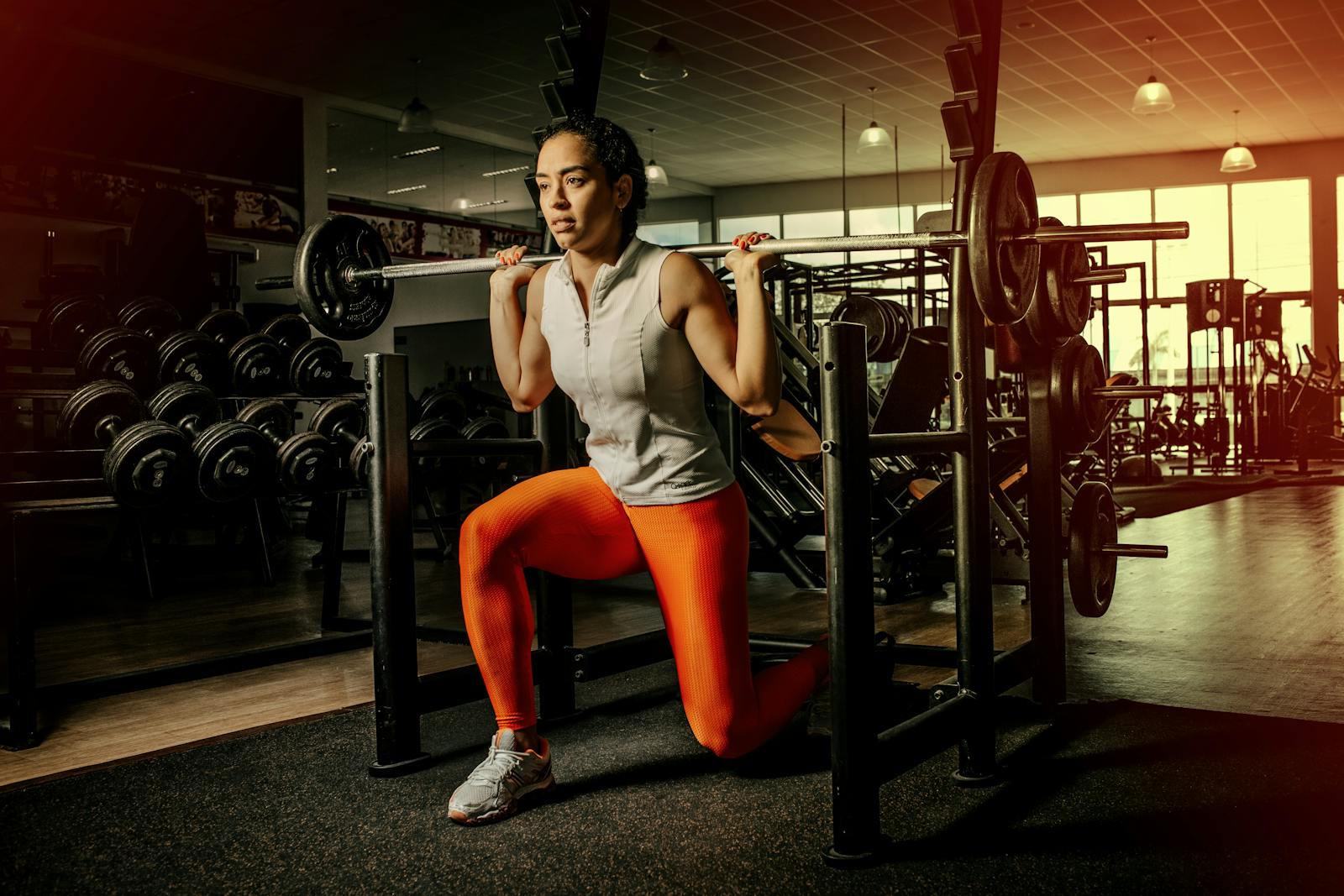
Imagine putting a barbell on the upper back of the tube that’s been sitting all day. Because it’s out of balance, with the muscles in the front tighter than the back, all those intertwining muscles can’t provide as much assistance and stabilization as they normally would.
That means the tube naturally folds forward during the squatting motion, putting a lot of extra pressure on the lower back part of the tube.
OUCH!
BUT … if all of the muscles were working together to hold the tube upright during the squat, it could have transferred more of the weight down to the legs, which would have not only been safer but also would have accommodated more weight on the barbell.
This same principle applies to almost every strength exercise!
How to Fix it: Core and Mobility Work
So how do you get your “tube” (core) back in balance so all those muscles do their job? You make time for mobility work and targeted core exercises. It’s that simple—but also that important.
4 Moves That Target Your Core
Core Strength Exercises: #1. Foam Roll Your Hip Flexors
Grab a foam roller and get into a plank from your forearms, with the roll under one of your hips. Gently roll back and forth for about 30 seconds, paying special attention to spots that feel tight.
Repeat on the other side.
BONUS: Also roll out your quads (the muscles in the front of your thighs).
Core Strength Exercises: #2. Bridges
This move fires up your glutes and also works your core. Lying on your back with your knees bent and feet flat on the floor, push up through your heels and lift your hips up toward the ceiling, really squeezing through your glute muscles.
Repeat for 15-20 reps.
NOTE: If your hip flexors are super tight it can affect how well your glutes do their job so it pays to really focus.
Core Strength Exercises: #3. Woodchopper
This move builds your rotational strength: Hold a light to a medium dumbbell with both hands and stand with your feet shoulder-width apart.
Twist slightly so that the dumbbell is by your right thigh, and abs braced, move the dumbbell at a 45º angle so that it rotates toward (and above) your left shoulder. Return to the starting position and repeat for 8-10 reps.
Repeat on the other side.
Core Strength Exercises: #4. Forearm Plank
This move challenges your entire core: Get into a push-up position but bend your arms so that your weight is on your forearms. Your elbows should be directly under your shoulders.
Keep your body in a straight line from your head to your heels, your abs and glutes tight and strong.
Make sure you breathe! Hold for 30 to 60 seconds.
Those are some exercises to get you started. Trust me, it’ll make a huge difference in how you feel during your workouts and in how much you can lift.


Frequently Asked Questions
Do I really need core exercises if I already squat regularly?
Yes. Squats train your core, but they don’t always correct imbalances. If your core or hip flexors are tight or weak, your body will compensate, often through your lower back. Targeted core work helps you squat with better alignment, stability, and power.
How often should I do these core exercises?
2–3 times per week is enough for most people. You can add them:
- After your workout as a finisher
- On rest days as a short mobility + core session
- Before squats as activation work (especially bridges and planks)
Consistency matters more than intensity here.
Will these exercises help me lift heavier weights?
They can—indirectly. A stronger, more stable core improves:
- Bracing under load
- Balance in the squat
- Force transfer from upper to lower body
That usually translates into better form and more strength over time.
I feel my lower back more than my abs during planks. Is that normal?
No, that’s a sign something is off. Common causes include:
- Weak deep core engagement
- Tight hip flexors pulling your pelvis forward
- Lack of glute activation
Try shortening your plank time, tightening your glutes, and focusing on a neutral spine rather than just “holding longer.”
Why do hip flexor foam rolls matter for core strength?
Because tight hip flexors can pull your pelvis out of alignment. That makes it harder for your core and glutes to work properly during squats and other lifts. Releasing them helps restore better movement mechanics.
Can beginners do all four exercises?
Yes. These are beginner-friendly. Just scale them:
- Shorter plank holds (20–30 seconds)
- Lighter weight for woodchoppers
- Slower, controlled bridges
- Gentle foam rolling without pushing into pain
How long until I notice a difference?
Most people feel some improvement in stability within 1–2 weeks.
Strength and performance changes usually show up within 3–6 weeks if you’re consistent.
Do I need equipment for this routine?
Minimal:
- Foam roller (for hip flexors/quads)
- Dumbbell (for woodchoppers)
- Mat or floor space (for bridges and planks)
That’s it.
Related Posts
7 Exercises to Build Stronger Glutes and Improve Core Strength
The 7 Signs You Have a Weak Core That You Can’t Ignore